Major Homebuying Decisions
The decisions that shape your entire homebuying outcome
The biggest financial decisions you'll make before buying a home. Every guide answers one real question with the same structure: the honest verdict, the math, the trade-offs, and what to do next. Written and reviewed by a licensed loan officer — no hedging, no sales pitch.

Should I Buy a Home Now or Wait?
Nobody can time the housing market, and trying to is the most expensive habit in homebuying. The question that actually has an answer is whether your file is ready — stable income, a payment you can carry comfortably, cash to close, and a plan to stay put for at least three to five years. If all four are true, waiting for a better market is a gamble with no scoreboard. If any one of them is false, waiting isn't losing; it's preparation, and it usually pays better than the market ever will.
14 min read
Should I Rent or Buy?
Renting and buying aren't opposites — they're two different ways to pay for shelter, each with its own costs, and both are legitimate depending on your situation. Buying tends to win financially when you'll stay put for at least three to five years, the full monthly payment fits comfortably in your budget, and you have cash to close plus a reserve left over. Renting tends to win when your timeline is uncertain, your cash would be better used elsewhere, or the numbers in your specific market simply don't break even inside a reasonable holding period. The honest answer requires running your actual numbers, not comparing a rent check to a mortgage quote.
15 min read
Should I Get Pre-Approved Before Looking at Homes?
Yes — with almost no exceptions. Pre-approval isn't a formality you do after you find a house; it's the tool that tells you which houses you're allowed to fall in love with. It costs nothing but a little paperwork, a soft or single hard credit pull, and an hour of your time. Without it, you're shopping on a guess, sellers won't take you seriously in a competitive offer, and you risk losing a home you could have actually afforded. The only real reason to delay is if you're more than about a year out and still stabilizing income, debt, or credit — and even then, an early check-in with a loan officer costs you nothing.
13 min read
Should I Pay Off Debt Before Buying a Home?
Underwriters don't care what you owe — they care what you pay every month. That single fact changes almost every debt decision a buyer makes before applying for a mortgage. Paying off a card with a $40 minimum barely moves your qualifying ratio; paying off a $450 car payment can move it enormously. Meanwhile, some of the moves that feel responsible — closing an old card, paying a collection right before applying — can quietly work against you. The right answer isn't 'pay off everything' or 'pay off nothing.' It's knowing which specific balances change your debt-to-income ratio, which change your credit score, and which change neither.
13 min read
Should I Put 20% Down?
Twenty percent down is not a requirement — it's a threshold that removes private mortgage insurance on a conventional loan and strengthens your offer. Conventional loans start at 3% down, FHA at 3.5%, and VA and USDA can go to 0% for eligible borrowers. Putting down less means paying mortgage insurance, but that cost is often smaller and more temporary than buyers assume, and tying up an extra 15%–17% of the purchase price in your house has a real opportunity cost of its own. The right down payment is the one that lets you close comfortably, keep a cash reserve, and still hit your other financial goals — not a round number you saw in a headline.
13 min read
Should I Use Down Payment Assistance?
Down payment assistance isn't free money and it isn't a trap — it's a tool with rules, and the rules vary by state, county, and program. For a buyer who is otherwise ready but short on cash, it can move a purchase up by years. For a buyer chasing the lowest possible monthly cost, it can add friction: a slightly higher rate, an income cap, an occupancy requirement, and sometimes a repayment clause you didn't read closely. The decision comes down to matching the program's structure to your actual plans for the home and how long you intend to keep it.
13 min read
FHA vs Conventional for First-Time Buyers
FHA and conventional loans solve the same problem — buying a home without 20% down — but they charge for it differently. FHA is more forgiving on credit and debt, with a mortgage insurance premium that usually sticks around for the life of the loan at low down payments. Conventional demands a somewhat stronger file but its private mortgage insurance can be cancelled once you build equity, and it gets cheaper as your credit score improves. The right answer isn't which program is 'better' — it's which one matches your credit score, your debt load, and how long you plan to keep the loan.
15 min read
Fixed-Rate vs ARM: Which Is Right for Me?
A fixed-rate mortgage locks your principal-and-interest payment for the life of the loan. An adjustable-rate mortgage (ARM) trades a lower initial rate for a rate that can change after a set period, based on a published index plus a margin, inside caps set at closing. Today's ARMs are not the loose products from before 2008 — lenders must qualify you using rules that account for the payment after adjustment, and negative amortization on qualified mortgages isn't allowed. The honest way to choose is to compare the fixed rate against the ARM's initial rate, run what happens at the first and worst-case adjustment, and be realistic about how long you'll actually keep the loan and whether refinancing later is something you can count on or just something you hope for.
14 min read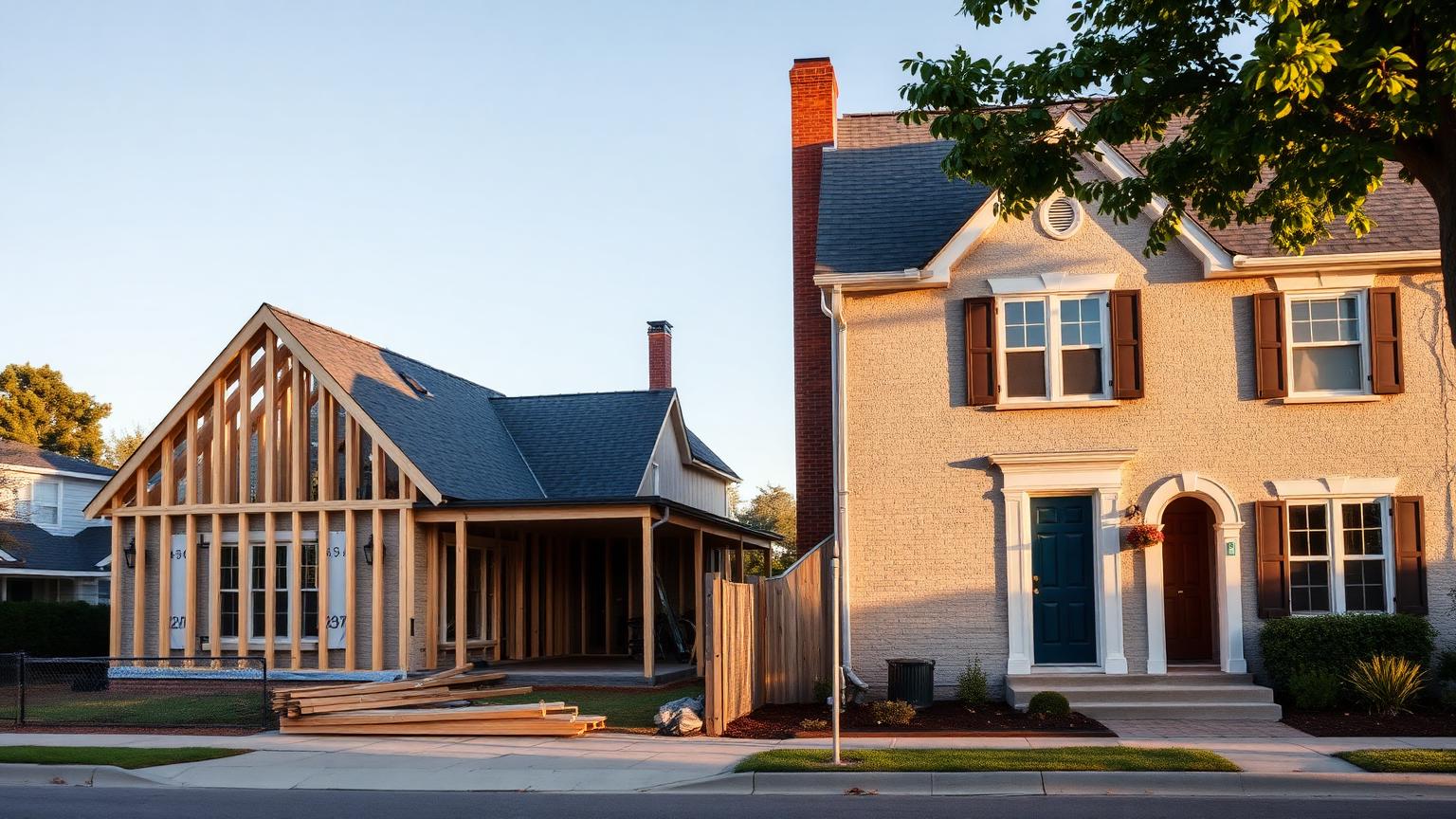
Should I Buy a New Construction Home or an Existing Home?
New construction and an existing home solve different problems, and the marketing on both sides tends to hide the fine print. A builder's ‘from the low $400s' sign is a base price that usually excludes the lot, most upgrades, landscaping, and window coverings — and their preferred-lender rate can look better than it is once you compare the full loan terms. An existing home gives you a real house to inspect today, a mature neighborhood, and room to negotiate, but it also comes with someone else's deferred maintenance and a payment that starts on your closing date, not six to twelve months from now. Neither is automatically the better financial move; the right one depends on your timeline, your appetite for a build schedule, and whether you can budget accurately for what each path actually costs once the incentives and allowances are stripped out.
15 min read
Should I Buy Before Selling My Current Home?
Buying your next home before your current one sells solves a real problem — you don't want to move twice, and you don't want to lose your dream house while waiting on a buyer. But it creates a harder one: for a stretch of weeks or months, you may need to qualify for and carry two mortgage payments at once. Whether that's workable depends on your debt-to-income ratio, your equity, your reserves, and which financing bridge — rental income, a HELOC opened in advance, a bridge loan, or a sale contingency — actually fits your numbers. There's no universally right order of operations; there's only the order that your file can support.
15 min read
Should I Buy a Home With an HOA? (2026 Guide)
A homeowners association (HOA) isn't automatically a red flag — most condos, townhomes, and many single-family subdivisions have one, and dues fund shared amenities, insurance, and upkeep you'd otherwise pay for yourself. The real question isn't "HOA or no HOA," it's whether this specific association is financially healthy, whether the dues fit comfortably in your budget on top of your mortgage payment, and whether the project itself will pass your lender's condo/PUD approval requirements. Lenders count HOA dues as a real monthly obligation in your debt-to-income ratio, and they dig into the association's finances — reserves, delinquency rates, insurance, litigation — before they'll approve financing on the unit at all. Read the governing documents, the reserve study, and the budget before you fall in love with the amenities.
13 min read