
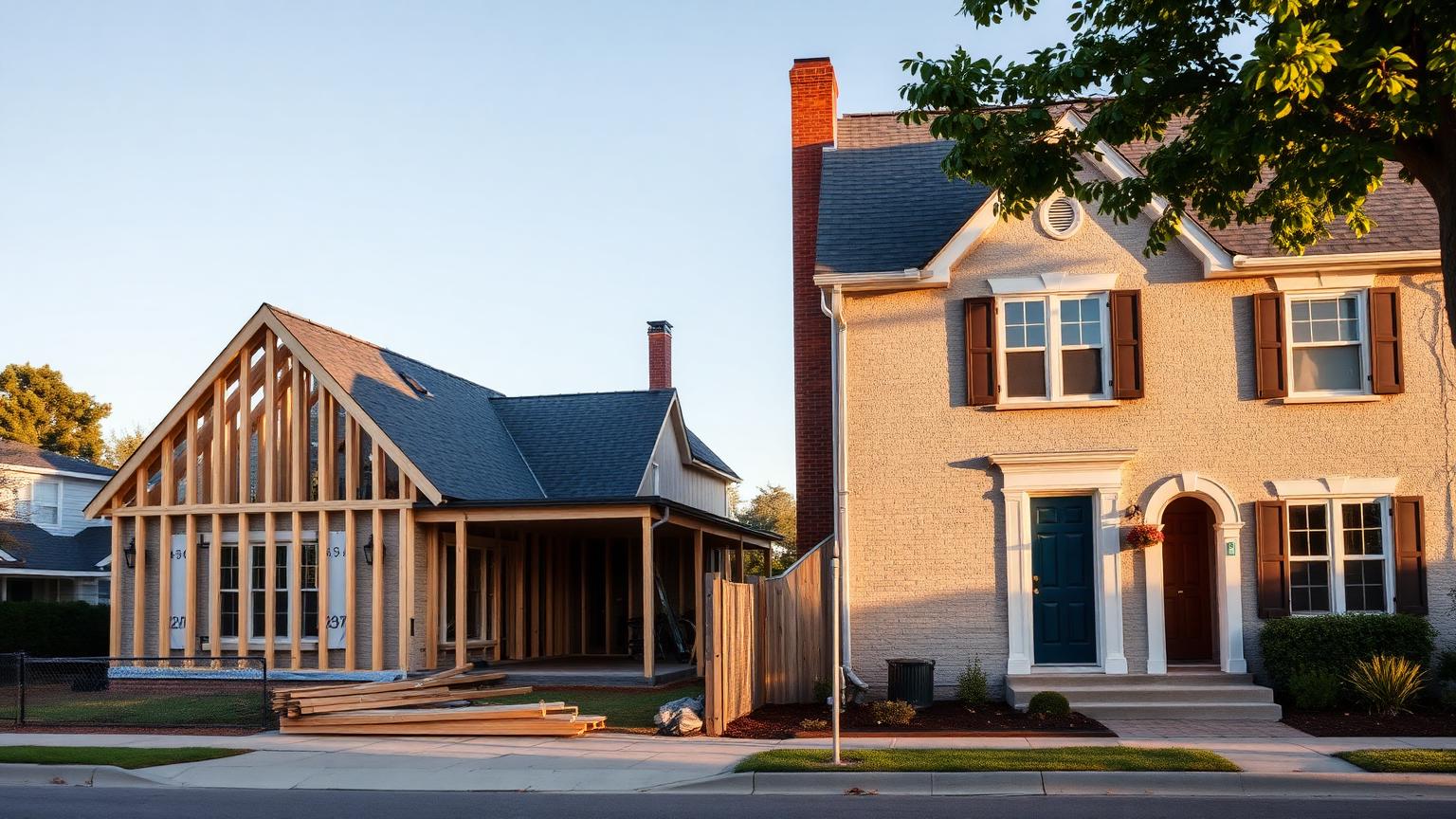
- A builder's advertised price usually excludes the lot, upgrades, landscaping, and blinds — price the finished home, not the sign.
- Existing homes let you inspect what you're actually buying today, with room to negotiate on price and repairs.
- The biggest trap: assuming the builder's preferred lender rate beats the market without comparing full loan terms.
- First step: get an independent inspection at every major build stage if you go new — never rely on the builder's own inspector alone.
Move forward if
New construction fits you if you can wait out a build schedule, you'll get an independent inspection at every major stage anyway, and you're disciplined enough to price the finished home — lot premium, upgrades, landscaping, blinds — before you fall for the base price on the sign.
Wait if
An existing home fits you if you want to see exactly what you're buying today, want more room to negotiate on price and repairs, or want an established neighborhood with mature trees, known schools, and a settled tax bill.
Consider an alternative if
Many buyers do both: shop existing homes seriously while keeping an eye on a builder's quick-move-in inventory, which is already finished and priced with fewer unknowns than a home you'd design from scratch.
Should I buy new construction or an existing home? — one-page checklist
One page. Print it, screenshot it, or send it to your lender.
What "base price" actually leaves out
The number on the builder's sign is the starting bid, not the price you'll pay. Treat it like a menu, not a receipt.
Builder advertising is legal, but it's built around a number almost nobody actually pays: the base price of the smallest floor plan on the least desirable lot with the base-grade finishes. Everything that makes the model home look like the model home is usually an add-on.
Here's what commonly sits outside the base price:
- Lot premium. A corner lot, a cul-de-sac, a walkout basement, a lot backing to green space instead of another house — all of these can add real money, sometimes tens of thousands of dollars.
- Structural upgrades. Extra square footage, a finished basement, an extra garage bay, or a bump-out are priced separately and can't always be added later.
- Design center selections. Countertops above the builder-grade tier, flooring upgrades, cabinet finishes, and lighting packages are where many buyers get their biggest surprise. Walking out of the design center $20,000–$50,000 over the base price is common, not rare.
- Landscaping. Some builders include only minimal sod and no trees; a finished yard may be a separate line item or entirely on you after closing.
- Window coverings. New-construction homes routinely close with bare windows. Blinds or shades are your cost, and on a two-story great room that's not a small check.
- Site and utility costs. Sloped lots, well and septic instead of municipal service, or unusual soil conditions can trigger engineering or site-prep charges that aren't in the standard price sheet.
Ask for a fully itemized, all-in price before you get emotionally attached to a model. Run that real number, not the sign number, through the mortgage payment calculator and the affordability calculator before you sign anything.
Builder incentives and the preferred-lender rate buydown
Builders often offer meaningful closing-cost credits, design-center allowances, or a rate buydown if you finance through their preferred or affiliated lender. These incentives are real and can be worth tens of thousands of dollars — but they're also structured to keep your business inside the builder's ecosystem, and the headline rate isn't the whole story.
Why you should still shop the loan:
- The rate may look great and the fees may not. A below-market rate can be paired with higher origination charges, junk fees, or a shorter lock than advertised. Compare the full Loan Estimate, not just the rate quoted verbally.
- Incentives are often conditional on using their lender. That's the leverage point — it doesn't mean their loan is the best available, only that it's the one attached to the discount. Get a competing quote and ask the builder whether the incentive can be matched if you use an outside lender; sometimes it can.
- A temporary buydown isn't a permanent rate. Many builder incentives are 2-1 or 1-0 buydowns that lower your payment for the first one or two years, then step up to the note rate. Model the payment at the *final* rate, not the teaser year, using the mortgage payment calculator.
- You can still negotiate. Ask for the incentive as a closing-cost credit instead of a rate buydown if that serves your cash-to-close needs better. Run the trade-off with the closing costs calculator.
The rule of thumb: get pre-approved with an outside lender before you walk into the sales office. It gives you a real baseline to compare the builder's offer against, and it keeps you from negotiating with only one number in hand. See should I get preapproved before looking for the mechanics.
At a glance
Buy new construction (build)
Design or select a home from a builder's plan, waiting through a build schedule to move in.
Buyers who can wait out a build, want everything new and under warranty, and will get their own independent inspections during construction.
You need to move within a firm, short timeline, or you can't absorb an extended rate lock cost or a tax reassessment increase.
Buy a new-construction quick-move-in home
A spec home the builder already built on speculation, finished or nearly finished and priced as-is.
Buyers who want the benefits of new construction without a long build timeline.
You have specific must-have layout or finish requirements a spec home doesn't meet.
Builder contracts have fewer contingencies than you're used to
A resale purchase agreement typically gives you an inspection contingency, a financing contingency, and sometimes an appraisal contingency, all with defined windows to walk away and get your earnest money back. Builder contracts are written by the builder's attorneys, and they tend to be considerably more favorable to the builder.
What's commonly different:
- Limited or no inspection contingency. Some builder contracts don't let you cancel over inspection findings the way a resale contract would; instead, the builder agrees to fix defects under warranty. That makes independent inspections during the build even more important, since you're catching problems before drywall closes them in rather than negotiating repairs after the fact.
- Price escalation clauses. In a rising-cost environment, some contracts allow the builder to pass along material or labor cost increases between contract signing and closing. Read this clause carefully and ask for a cap if one isn't already there.
- Completion date is an estimate, not a promise. Weather, permitting, and supply delays are common, and most builder contracts protect the builder from penalties for reasonable delays. Ask what happens to your rate lock and your current lease or sale timeline if the home isn't ready when expected.
- Deposit and earnest money terms can be larger and less refundable than a typical resale deposit, especially for custom or highly upgraded homes.
- Arbitration clauses are common in builder contracts and can limit your ability to sue over defects; understand what dispute process you're agreeing to.
Have a real estate attorney or an agent experienced with new construction review the contract before you sign — the builder's on-site rep works for the builder, not for you. If you're using an outside buyer's agent, confirm before your first visit that they can represent you; some builders require registering an agent on your first visit or lose the ability to claim a commission on your behalf.
“The sign in front of a new build shows you the starting price. It never shows you the finished one.”
Build timelines, rate locks, and what can go wrong while you wait
A resale closing typically takes 30–45 days from contract to keys. New construction can take anywhere from a few weeks for a finished quick-move-in home to 9–12+ months for a home built from the ground up, longer for custom builds or in high-demand markets.
That gap matters most for your rate. A standard rate lock runs 30–60 days. If your build will take six months or more, you need one of these:
- An extended or float-down lock, often available for a fee, that covers a longer build window and sometimes lets you capture a lower rate if the market improves before closing.
- A re-lock closer to completion, which means you're exposed to rate movement in the meantime — your payment estimate today is not guaranteed.
- A builder-affiliated lock program, which may bundle the extended-lock cost into the incentive package discussed above.
Ask exactly what an extended lock costs, whether it includes a float-down if rates drop, and what happens if the build runs past the locked period — extension fees can be substantial if a delay isn't the lender's fault.
Other things that move during a long build:
- Your own financial picture. You'll be fully re-verified — income, assets, credit, and debt — close to closing. A new car loan, a job change, or a dip in credit score during a nine-month build can affect your approval even though you were approved at contract signing.
- Property taxes and insurance estimates. These are often based on incomplete information (raw land, no structure yet) at contract signing and can come in higher once the home and neighborhood are built out. See the tax reassessment section below.
- Your current housing costs. If you're renting or carrying a lease that expires before the home is ready, a delay can mean a costly month-to-month renewal or a short-term rental.
Build in a buffer, both financially and in your living situation, for the build to run longer than the builder's initial estimate.
Warranties, HOAs, and community development district assessments
New construction usually comes with a builder warranty — commonly one year on workmanship and materials, two years on major systems like plumbing and electrical, and a longer structural warranty, often ten years, on load-bearing elements. Read what's actually covered; cosmetic issues, normal settling cracks, and buyer-caused damage are typically excluded, and you'll need to document and report issues within specific windows to keep coverage in force.
New subdivisions are also far more likely than an established neighborhood to carry ongoing costs beyond the mortgage payment:
- Homeowners association (HOA) dues are common in new communities and fund shared amenities, common-area landscaping, and enforcement of the community's rules. Ask for the HOA budget and reserve study, not just the current dues — new HOAs sometimes underprice dues early on and raise them once reserves run short.
- Community Development District (CDD) or special assessments are used in some states, especially for master-planned communities, to finance infrastructure like roads, sewer, and amenities. These show up as a separate line on your property tax bill or as a direct assessment and can run well beyond a typical HOA fee — ask specifically whether the community has one and get the payoff schedule and current balance.
- Builder-controlled HOA board in the early years means the builder — not homeowners — often sets the budget and priorities until enough homes are sold to turn control over. Understand when that handoff happens.
An existing home in an established neighborhood may still have an HOA, but it's had years to find its real operating costs, and you can review actual financial statements and meeting minutes rather than a builder's projection.
How it flows
Step 1
Shop and compare
Tour resale listings and builder communities; get an itemized all-in price on any new-construction plan before comparing it to resale sticker prices.
Step 2
Get pre-approved with an outside lender
Establish a baseline rate and fee structure before evaluating any builder-incentive financing.
Step 3
Contract review
Have an attorney or experienced agent review a builder contract for contingencies, price-escalation clauses, and warranty terms before signing.
Step 4
Build phase (new construction only)
Schedule independent inspections at pre-drywall and pre-closing stages; monitor rate lock status and re-verify financial readiness as closing approaches.
Step 5
Inspection and negotiation (existing homes)
Order a full home inspection, negotiate repairs or credits, and confirm current tax and HOA figures.
Property tax reassessment: the new-subdivision surprise
One of the most common financial surprises in new construction is the property tax bill. Many counties assess a new home's first tax bill based on the value of the land alone, because the structure wasn't complete as of the assessment date. That first year's estimated taxes — the number your lender used to calculate your escrow payment at closing — can be dramatically lower than what you'll actually owe once the county reassesses the completed home.
When the reassessment catches up, often in year two, your tax bill can jump substantially, and your escrow account may come up short. That typically means:
- An escrow shortage notice, requiring either a lump-sum payment or a spread-out increase to your monthly payment for the following year.
- A payment that's noticeably higher than what you budgeted for at closing, even though your rate and loan amount haven't changed.
This is not unique to any one builder or lender — it's how property tax assessment cycles work in most counties. Ask your lender to estimate taxes based on the completed home's expected assessed value, not the current land-only assessment, and ask the county assessor's office directly what a comparable finished home in the subdivision is currently taxed at. Build a cushion into your budget for this, and revisit your numbers with the mortgage payment calculator and the affordability calculator using the higher estimate.
Existing homes have this figured out already — the tax bill you see at the listing is a real, current number, not a placeholder that will jump in twelve months.
What you get — and give up — with an existing home
Existing homes solve problems new construction can't, and it's worth being just as clear-eyed about their trade-offs.
What existing homes offer:
- Negotiation leverage. Sellers can negotiate on price, closing costs, repairs, and timeline in ways a builder — who is also selling every other lot in the subdivision at a set price — usually won't.
- Mature neighborhoods. Established trees, settled traffic patterns, known school performance, and neighbors who've been there long enough to tell you what the area is really like.
- You can inspect the actual, finished product today. No allowances, no design-center guesswork, no waiting to see how the lot drains after the first heavy rain — an inspection tells you what you're buying, now.
- A known, current tax bill and, often, HOA financials with real history instead of a builder's projection.
What you give up:
- Deferred maintenance. Roofs, water heaters, HVAC systems, and windows all have a service life, and a previous owner's neglect becomes your repair bill. Budget realistically using inspection findings, not hope — see should I put 20% down for how a smaller down payment can leave less room for surprise repairs.
- Dated systems and finishes. Older electrical panels, outdated kitchens, or a layout that doesn't fit your life may mean a renovation budget on top of the purchase price. Price this in before you compare it to a new home's higher sticker price — a $30,000 discount on an existing home isn't a discount if it needs a $40,000 kitchen and roof.
- More competition in some markets and price bands, particularly for well-priced, move-in-ready homes, which can mean less negotiating room than the general rule above suggests.
- Less predictability on efficiency and warranty coverage. Older systems may not carry any warranty, and utility costs can run higher than a new home's current energy code minimums.
The fair comparison is never sticker price versus sticker price — it's total cost of ownership over your expected hold period, including likely repairs on the existing home and likely upgrades-you'll-still-want on the new one.
The decision framework
Buy new construction (build)
Design or select a home from a builder's plan, waiting through a build schedule to move in.
Pros
- Everything is new — systems, roof, appliances, warranty coverage
- Some ability to select finishes and, on some plans, layout options
- Built to current energy code, often lowering utility costs
- Builder incentives can meaningfully offset closing costs or rate
Cons
- Base price rarely reflects the final price once lot, upgrades, and landscaping are added
- Build delays are common and can strain your rate lock and living situation
- Fewer contract contingencies than a resale purchase
- First-year tax bill is often understated, risking an escrow shortage later
- Best for:
- Buyers who can wait out a build, want everything new and under warranty, and will get their own independent inspections during construction.
- Avoid if:
- You need to move within a firm, short timeline, or you can't absorb an extended rate lock cost or a tax reassessment increase.
Buy a new-construction quick-move-in home
A spec home the builder already built on speculation, finished or nearly finished and priced as-is.
Pros
- Shorter timeline than a full build — often 30–60 days
- Price is set on a finished product, fewer allowance surprises
- Still comes with standard builder warranties
- You can inspect the actual home, not a model
Cons
- Little to no ability to customize finishes or layout
- Still subject to the same tax reassessment and HOA/CDD considerations as any new home
- Selection may be limited to whatever the builder has unsold
- Best for:
- Buyers who want the benefits of new construction without a long build timeline.
- Avoid if:
- You have specific must-have layout or finish requirements a spec home doesn't meet.
Buy an existing (resale) home
Purchase a previously owned home, inspected and negotiated through a standard resale contract.
Pros
- Full inspection contingency and more standard buyer protections
- Real, current tax bill and, often, real HOA financial history
- More room to negotiate price, repairs, and closing costs
- Established neighborhood, mature landscaping, known school and traffic patterns
Cons
- Deferred maintenance and aging systems can mean real near-term repair costs
- Dated layouts or finishes may require a renovation budget
- Competition can be intense for well-priced, move-in-ready listings
- No builder warranty unless a home warranty is purchased separately
- Best for:
- Buyers who want to see exactly what they're buying today, want negotiating leverage, and value an established neighborhood.
- Avoid if:
- You're not prepared to budget for near-term repairs or a renovation on an older home.
Keep shopping both simultaneously
Compare resale listings and builder quick-move-in inventory in parallel before committing to either path.
Pros
- Gives you a true side-by-side on total cost, not just sticker price
- Strengthens your negotiating position with both a builder and resale sellers
- Reduces the risk of overpaying for either based on incomplete comparisons
Cons
- Takes more time and legwork than committing to one path early
- Requires financing pre-approval flexible enough to move on either type of purchase
- Best for:
- Buyers with some time flexibility who want the most accurate picture before choosing.
- Avoid if:
- You're on a tight timeline and need to commit to move the process forward.
Which path fits you?
Decision tree
- 1
Do you need to move within the next 60–90 days?
A full build almost certainly won't finish in time. A resale home or a builder's quick-move-in inventory are your realistic paths.
Yes → existing home or quick-move-in
- 2
Have you priced the fully upgraded, all-in cost of the new-construction home you're considering — lot, upgrades, landscaping, blinds?
If you're only comparing base prices, you're not making a real comparison yet. Get an itemized, all-in quote before deciding.
No → get the real number first
- 3
Can you tolerate an extended rate lock cost, or the risk of a re-lock at a different rate closer to completion?
If your budget only works at today's rate and you can't absorb a lock extension fee or rate movement, a long build adds real risk.
No → weigh quick-move-in or resale instead
- 4
Have you asked the builder and county about the completed home's expected tax assessment, not the current land-only bill?
If your payment estimate is based on a land-only tax bill, budget for an increase once the county reassesses the finished home.
No → get the completed-home tax estimate before signing
- 5
Does the community carry an HOA, and in some states, a CDD or special assessment?
Get the HOA budget and reserve study, and ask directly about any special district assessment and its payoff balance.
Unclear → ask before contract
- 6
For an existing home: did the inspection reveal deferred maintenance you can realistically budget for?
Use inspection findings to negotiate price or credits, or to size a post-closing repair fund — don't absorb major system replacements blind.
No → renegotiate or keep shopping
- 7
All things considered, which total cost fits your timeline and budget better?
Compare full, all-in costs and timelines side by side rather than sticker prices — then move forward with financing already pre-approved.
Decide based on total cost, not the sign price
What this costs in real life
Illustrative examples using round numbers. Rates, taxes, and insurance vary — run your own file in the affordability calculator before acting on any figure below.
Example
Maria — comparing a builder's base price to the real price
Maria is quoted a $415,000 base price on a new-construction plan. Illustrative figures only, based on common allowance patterns — not a quote for any specific builder.
| Line item | Base price sign | All-in price after selections |
|---|---|---|
| Advertised base price | $415,000 | $415,000 |
| Lot premium (corner lot) | $0 shown | $18,000 |
| Structural upgrade (finished basement) | $0 shown | $32,000 |
| Design center selections (flooring, cabinets, counters) | $0 shown | $27,000 |
| Landscaping package + blinds | $0 shown | $9,500 |
| Estimated all-in purchase price | $415,000 (advertised) | ~$501,500 (actual) |
Takeaway: The advertised price was roughly 17% below what Maria actually financed. Getting a fully itemized quote before falling in love with a model home would have reset her budget expectations months earlier.
Example
David — new home's first-year tax bill versus year two
David closes on a new home where the county's initial tax estimate was based on land value only. Illustrative figures, based on common reassessment patterns — actual amounts vary by county.
| Line item | Year 1 (land-only estimate) | Year 2 (reassessed as completed home) |
|---|---|---|
| Assessed value used for taxes | $85,000 (lot only) | $460,000 (home + lot) |
| Estimated annual property tax | $1,400 | $6,900 |
| Monthly escrow portion at closing | ~$117/month | ~$575/month |
| Escrow shortage triggered in year 2 | n/a | ~$5,500 shortage |
| Resulting payment change | Payment as quoted at closing | Payment increase plus shortage repayment option |
| New estimated full monthly payment | As quoted at closing | ~$460/month higher |
Takeaway: David's real payment jumped significantly once the county caught up to the completed home's value. Asking his lender to estimate taxes on the finished home from day one would have avoided the shortage notice and the payment shock.
Your timeline
- 1
Shop and compare
Tour resale listings and builder communities; get an itemized all-in price on any new-construction plan before comparing it to resale sticker prices.
- 2
Get pre-approved with an outside lender
Establish a baseline rate and fee structure before evaluating any builder-incentive financing.
- 3
Contract review
Have an attorney or experienced agent review a builder contract for contingencies, price-escalation clauses, and warranty terms before signing.
- 4
Build phase (new construction only)
Schedule independent inspections at pre-drywall and pre-closing stages; monitor rate lock status and re-verify financial readiness as closing approaches.
- 5
Inspection and negotiation (existing homes)
Order a full home inspection, negotiate repairs or credits, and confirm current tax and HOA figures.
- 6
Closing and move-in
Confirm final all-in costs, escrow setup, and — for new construction — how to document warranty issues within their coverage windows.
Common mistakes
01Comparing the builder's base price to a resale home's full price
The base price rarely reflects what you'll actually pay once the lot, upgrades, and landscaping are added. Always compare all-in totals.
02Using the builder's preferred lender without getting an outside quote
The incentive can be real and the loan can still be more expensive than a competing offer once fees are included. Compare full Loan Estimates.
03Skipping independent inspections because the home is new
New-construction defects are common and far cheaper to catch before drywall closes them in than after you move in.
04Budgeting on the first-year, land-only tax estimate
Many new homes are reassessed at a much higher value once the structure is complete, which can trigger an escrow shortage in year two.
05Not asking about HOA or CDD costs upfront
New subdivisions often carry ongoing dues or special district assessments that aren't obvious from the base price or the model home tour.
06Assuming a builder's completion date is guaranteed
Most builder contracts protect the builder from penalties for reasonable delays; plan your rate lock and living situation with a buffer.
07Waiving inspection contingencies on a resale home to compete
This can leave you without recourse for major issues found after closing; consider other ways to compete, like a larger deposit or flexible timeline.
08Ignoring deferred maintenance costs on an older home
An older roof, HVAC system, or water heater near the end of its life is a near-term expense, not a hypothetical one — price it in.
09Letting the design center push the budget without a hard cap
Set a firm all-in ceiling before walking into selections, and track running totals as you go.
Expert tips from a licensed loan officer
- Ask the builder's sales office for the average final closing price of the last several homes on your floor plan — not the advertised base price.
- Get a competing rate and fee quote from an outside lender before evaluating any builder-incentive financing offer.
- Schedule your own pre-drywall inspection during a build; once walls close, many issues become far more expensive to find and fix.
- Ask your lender to estimate property taxes based on the completed home's expected assessed value, not the current land-only bill.
- Get the HOA's budget, reserve study, and any CDD or special assessment payoff balance in writing before signing a new-construction contract.
- On a resale home, use inspection findings as a negotiating tool for price or credits rather than an automatic reason to walk away.
Your decision checklist
Decision checklist
- Get a fully itemized, all-in price from the builder — not just the base price on the sign
- Get pre-approved with an outside lender before visiting a builder's sales office
- Compare the builder's incentive-adjusted rate and fees against an outside lender's full Loan Estimate
- Have an attorney or experienced agent review any builder contract before signing
- Confirm what inspection rights you have, and schedule independent inspections during the build regardless
- Ask what an extended or float-down rate lock costs if your build will run past 60 days
- Ask the county assessor and your lender for the completed home's expected tax assessment, not the land-only estimate
- Get the HOA budget, reserve study, and any CDD or special assessment balance before contract
- For existing homes, get a full inspection and price in likely near-term repairs before comparing total cost
- Compare total cost of ownership over your expected hold period, not just the purchase price
Take this checklist with you
One page. Print it, screenshot it, or send it to your lender.
Frequently asked questions
- Is new construction more expensive than an existing home?
- It depends on the finished, all-in comparison, not the advertised base price. A new home's base price often excludes the lot premium, upgrades, landscaping, and window coverings, which can add 15–30% or more. An existing home's sticker price is usually closer to the real total, but you may need to budget for repairs or renovations the builder-fresh systems don't require.
- Should I use the builder's preferred lender?
- Their incentives can be worth real money, but get a competing quote from an outside lender first. Compare the full Loan Estimate — rate, fees, and lock terms — not just the headline rate, and ask whether the incentive can be matched or adjusted if you use a different lender.
- Do I still need a home inspection on a new-construction home?
- Yes. New-construction defects — improper flashing, missing insulation, HVAC sizing errors — are common. Independent inspections at the pre-drywall stage and before closing catch issues while they're still cheap to fix.
- Why did my property taxes go up so much in year two of owning a new home?
- Many counties assess a new home's first tax bill on land value alone because the structure wasn't complete as of the assessment date. Once the county reassesses the finished home, often in the second year, the tax bill can rise substantially, which can create an escrow shortage if your original estimate wasn't based on the completed value.
- Can I negotiate the price on a new-construction home?
- Builders negotiate less on price than resale sellers typically do, since they're managing pricing across an entire subdivision. You may have more success negotiating closing-cost credits, upgrade allowances, or lot premiums than the base price itself.
- What is a CDD or special assessment, and do all new communities have one?
- A Community Development District or special assessment is a financing mechanism some communities use, mainly in certain states, to pay for infrastructure like roads and utilities. It's not universal — ask the builder directly whether the community has one, and get the current balance and payoff terms if it does.
- How long does it take to build a new home?
- A finished quick-move-in home might close in 30–60 days, while a home built from the ground up commonly takes 4–12 months, and longer for custom builds or in high-demand markets. Ask the builder for their realistic average, not just their best-case estimate.
- What happens to my rate lock if my new home takes longer to build than expected?
- A standard lock (30–60 days) likely won't cover a long build. Ask about an extended or float-down lock, what it costs, and what happens — including any extension fees — if the build runs past the locked period.
- What does a builder warranty typically cover?
- Most builder warranties cover workmanship and materials for about one year, major systems like plumbing and electrical for about two years, and structural elements for a longer period, often ten years. Cosmetic issues and normal settling are commonly excluded, and you'll need to report issues within specific windows to keep coverage active.
- Is it cheaper to buy an existing home and renovate, or buy new?
- It depends on the specific homes being compared. Price the existing home's likely near-term repairs and any renovation you'd want against the new home's realistic all-in price, including lot premium and upgrades, over your expected hold period — not just the two sticker prices.
- Do I need a real estate agent to buy new construction?
- You can, and in most cases the builder's incentives still apply — the builder typically pays the buyer's agent commission, not you. Confirm before your first visit, since some builders require registering your agent at the first visit for them to be recognized.
- What is a builder's price escalation clause?
- It's a contract term allowing the builder to pass along material or labor cost increases between contract signing and closing, common during periods of rising construction costs. Read it carefully and ask for a cap or a firm price if one isn't already included.
- Are HOA dues usually higher in new construction communities?
- Not necessarily higher, but often less predictable at first, since a new HOA may underprice dues early on and raise them once reserves need building. Ask for the HOA's budget and reserve study rather than relying on the current advertised dues alone.
- What should I check on an existing home that I wouldn't need to check on new construction?
- Prioritize the age and condition of the roof, HVAC system, water heater, electrical panel, and plumbing, since these are the deferred-maintenance items most likely to need near-term replacement. A full home inspection, and a specialist roof or HVAC inspection if warranted, will surface this.
- Can I back out of a new-construction contract if I change my mind?
- It depends on the contract terms, which are typically less flexible than a resale purchase agreement and may have limited or no general contingency for changing your mind. Have an attorney review the specific cancellation and earnest money terms before signing.
Verified against published lending guidelines
Every rule stated on this page is traceable to the agency handbook that governs it. Guidelines change — confirm anything time-sensitive with a licensed loan officer before acting on it.
- HUD Handbook 4000.1 — FHA new construction requirements, inspections, and warranty documentation standards.
- Fannie Mae Selling Guide — Conventional loan requirements for new construction appraisals and completion documentation.
- CFPB — Consumer guidance on builder-affiliated lenders, loan estimates, and comparison shopping for mortgages.
- FHFA / agency appraisal guidance — Appraisal standards applicable to new-construction and to-be-built properties.
Reviewed by Brian Mix, licensed loan officer (NMLS #111175) · Last checked August 2026.
Next decision
Now that you’ve worked through “Should I buy new construction or an existing home?” — here’s the decision that usually comes next.
Buy before selling my current home?If you already own, the home-search decision often collides with timing your sale — here's how to think about both.Continue the journey.
Learn this your way
RED can re-teach this page from its own published text — no jargon, no invented rules.
Educational only. RED won't quote rates or qualify you here — take the Readiness Scorecard when you want your own numbers.
Ready to see your real number?
Run your file with RED — free, 60 seconds, no credit pull.
Based on what you've just learned, I think these will help.
Hand-picked next reads for this topic.
Done with this guide?
Head back to the Knowledge Center to keep learning.